Blogs
Florida Supreme Court lowers the bar for pleading punitive damages
6/29/26
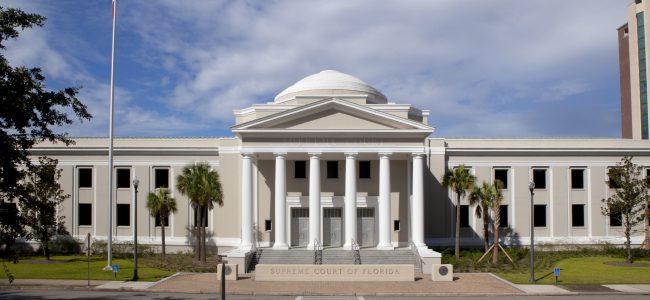
The Florida Supreme Court has resolved an important question about punitive damages practice under section 768.72, Florida Statutes. In Perlmutter v. Federal Insurance Co. (June 11, 2026), the Court held that the clear-and-convincing evidence standard does not apply when a trial court decides whether a claimant may amend to assert a punitive damages claim.
That holding matters. Before Perlmutter, some courts treated the punitive-damages amendment stage as something close to a preview of summary judgment. The Fourth District had held that a trial court should ask whether a reasonable jury, viewing the totality of the evidence in the light most favorable to the movant, could find by clear and convincing evidence that punitive damages were warranted. The Florida Supreme Court rejected that approach.
The Court’s answer to the certified question was straightforward: no. At the pleading stage, the claimant does not have to show that punitive damages could be proven by clear and convincing evidence at trial. Instead, the trial court asks whether a reasonable person could conclude, based on the claimant’s evidence, that the defendant committed intentional misconduct or gross negligence as defined by section 768.72(2). If the claim seeks punitive damages against an employer for an employee’s conduct, the court must also consider the requirements of section 768.72(3).
The Court also clarified what evidence the trial court may consider. Under section 768.72(1), the court should consider only the evidence identified or proffered by the claimant. It should not conduct a competing-evidence hearing or entertain an evidentiary counter-submission from the opponent. The Court reasoned that the statute imposes a burden of production on the claimant, but it does not create a mini-trial over competing factual submissions.
That does not mean the trial court becomes a rubber stamp. The Court emphasized several limits that remain important for defendants. Allegations in the proposed amended pleading are not evidence. The claimant still must make a reasonable evidentiary showing. The trial court must review the punitive damages request in the context of the underlying claims because punitive damages do not stand alone. And the court must still determine whether the claimant’s evidence provides facts from which one could reasonably conclude that the statutory standard for punitive damages has been met.
But the trial court may not weigh the claimant’s evidence, decide credibility, or determine the truth of the matter. The evidence must be viewed in the light most favorable to the claimant. The Court described section 768.72(1) as a pleading-stage screening mechanism, not a preemptive summary judgment proceeding.
The distinction is significant. Summary judgment remains available later, on a fuller record, to test whether the punitive damages claim can actually proceed to trial. The amendment-stage inquiry is narrower. It asks whether there is a reasonable evidentiary basis to plead punitive damages, not whether the claimant can already prove punitive damages by clear and convincing evidence.
For plaintiffs, Perlmutter lowers the barrier to pleading punitive damages in many cases. For defendants, it narrows the arguments available at the amendment stage. Defendants may still argue that the claimant’s proffer is legally insufficient, that allegations are being substituted for evidence, that the proffer does not support intentional misconduct or gross negligence, or that the punitive claim does not fit the underlying cause of action. But defendants can no longer insist that the trial court evaluate the proffer through the clear-and-convincing lens or resolve conflicts in the evidence at the amendment hearing.
The practical takeaway is that punitive damages motions will likely become more focused. Claimants will emphasize the evidence they proffer and argue reasonable inferences from that evidence. Opponents will need to focus less on factual rebuttal and more on whether the claimant’s own evidence, taken at its highest, satisfies the statutory definitions and supports punitive damages in the context of the pleaded claims.
Perlmutter is therefore a major clarification of Florida punitive damages procedure. It confirms that section 768.72 protects defendants from unsupported punitive damages claims and premature financial-worth discovery, but it does not require claimants to prove their punitive damages case before they are allowed to plead it.
For more information on this topic contact Robert Scavone Jr. at robert.scavone@fmglaw.com or your local FMG attorney.
Information conveyed herein should not be construed as legal advice or represent any specific or binding policy or procedure of any organization. Information provided is for educational purposes only. These materials are written in a general format and not intended to be advice applicable to any specific circumstance. Legal opinions may vary when based on subtle factual distinctions. All rights reserved. No part of this presentation may be reproduced, published or posted without the written permission of Freeman Mathis & Gary, LLP.
Share
Save Print